DLowCode Platform.
More Than BPM.
Our proprietary platform for building business applications combines deployment speed, flexibility, and security. A foundation that grows with your company.
What Sets Our Platform Apart?
DLowCode isn't your typical low-code platform with limits and restrictions. It's a proprietary tool built by a team with over a decade of experience in the financial industry. We offer capabilities that rival custom-developed systems – while maintaining low-code development speed.
Visual Process Design
BPMN Camunda, one of the most popular BPM engines
Drag & Drop Screen Builder
JsonForms with an extensive control library
Business Rules in Excel
Managed by business users
Report Templates in Word
Create and edit without developers
Fully Responsive
PC, tablet, smartphone
Rich Control Library
From simple to complex components, like installment groups
Extensible Architecture
If something's missing, we add it to the platform
Configuration Layer Instead of Code
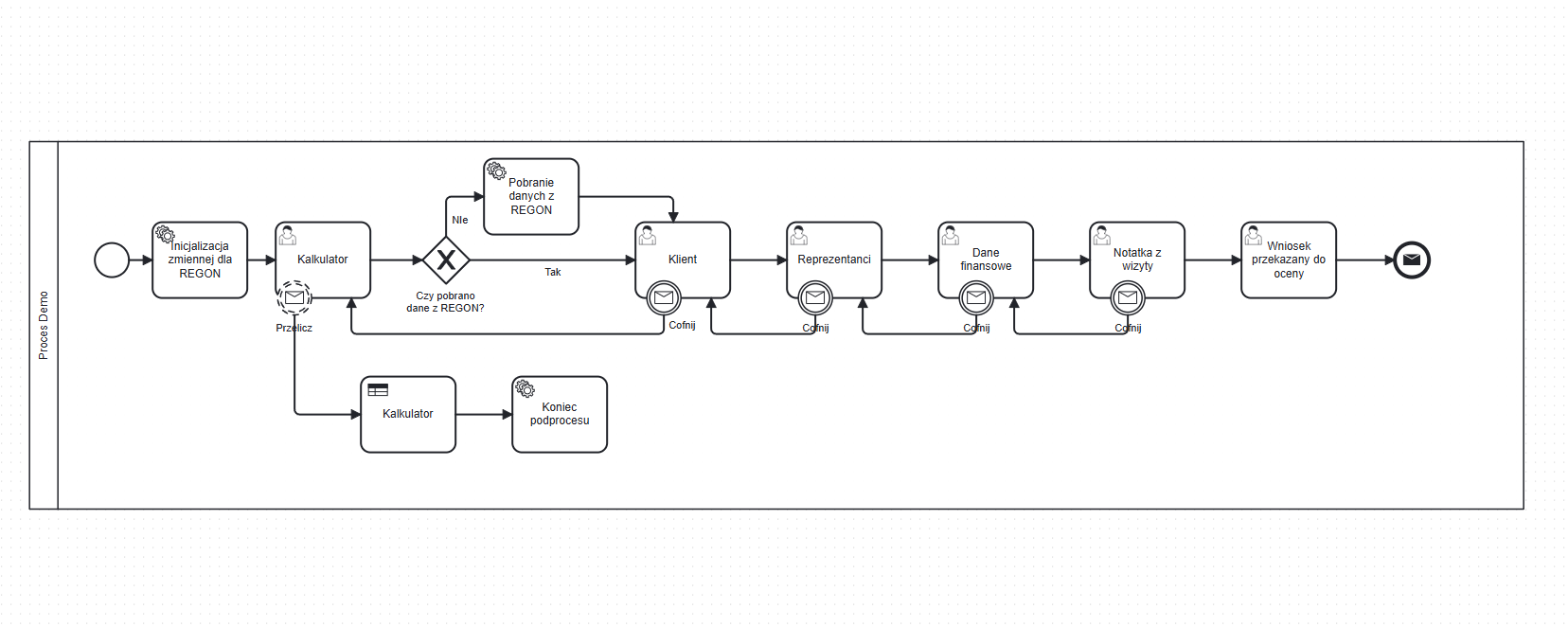
Design in BPMN Camunda
The entire business process – not just workflow – is defined visually in BPMN notation. It's one of the most popular process design methods used by major financial institutions. The diagram serves as both documentation and system implementation.
Visual process representation improves understanding and communication
Easy to implement changes without involving developers
New team members quickly get up to speed
Industry-standard used by many companies – easy to find specialists
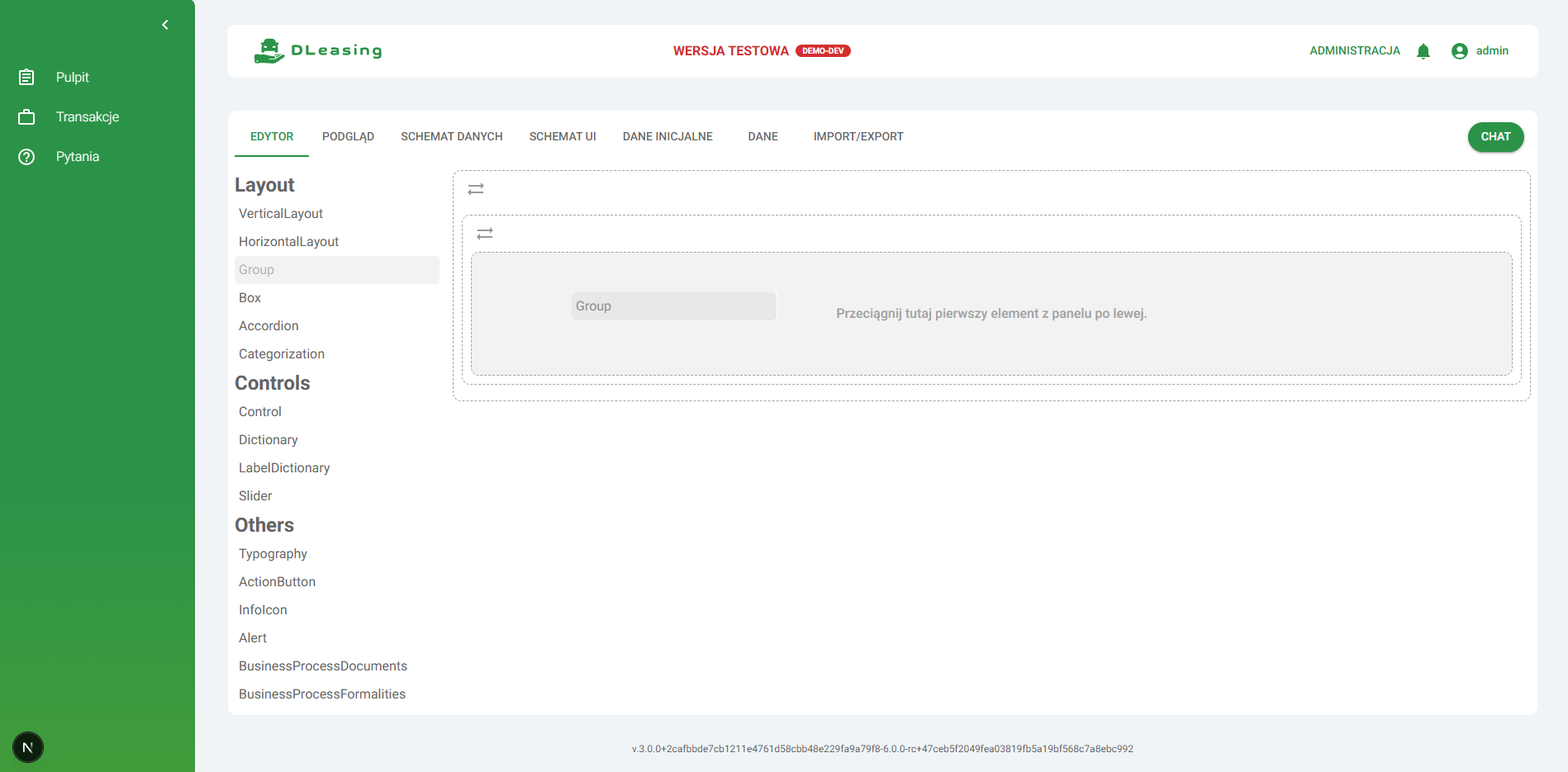
Screen Builder - Drag & Drop
We build screens using JsonForms technology – textually or with a visual builder. Unlike standard low-code platforms, we provide a rich library of controls tailored to financial system needs.
Standard:
text fields, numbers, dates, checkboxes, selects
Advanced:
sliders, tag lists, amount-percentage controls
Financial:
calculators, installment tables, repayment schedules
Documents:
attachments with automatic indexing and verification workflow
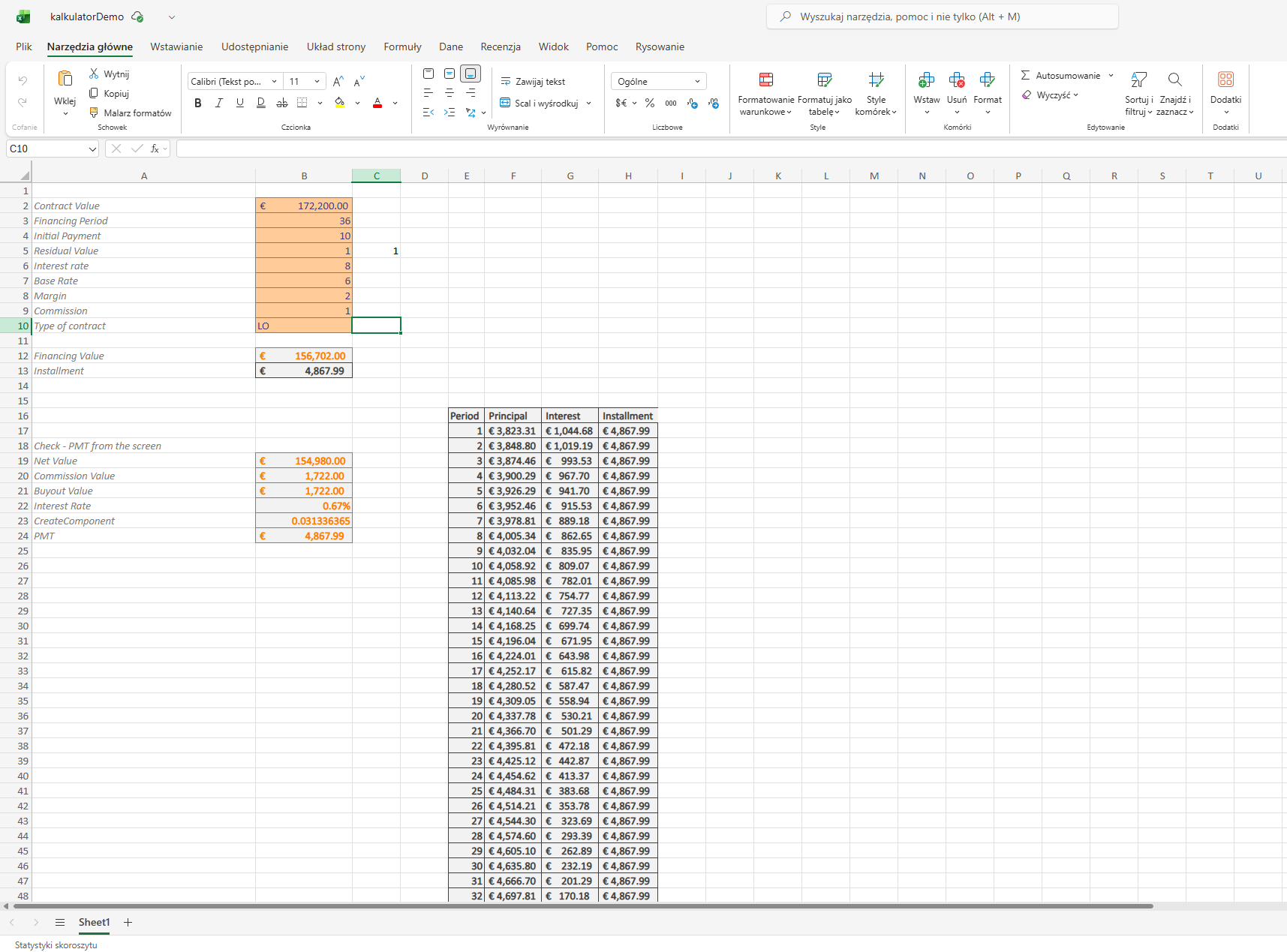
Business Logic in Excel Files
Business rules – often the most variable system elements – are defined in Excel files. This allows business users to manage them independently without developer involvement.
Example Applications:
- • Credit/leasing calculators
- • Promotion conditions
- • Eligibility rules
- • Assessment parameters
- • Scoring and ratings
- • Decision limits
How It Works:
Administrators import new Excel files into the system and specify validity periods. The system automatically applies the appropriate rules based on transaction dates. Full change history maintained.
Document Templates in Microsoft Word
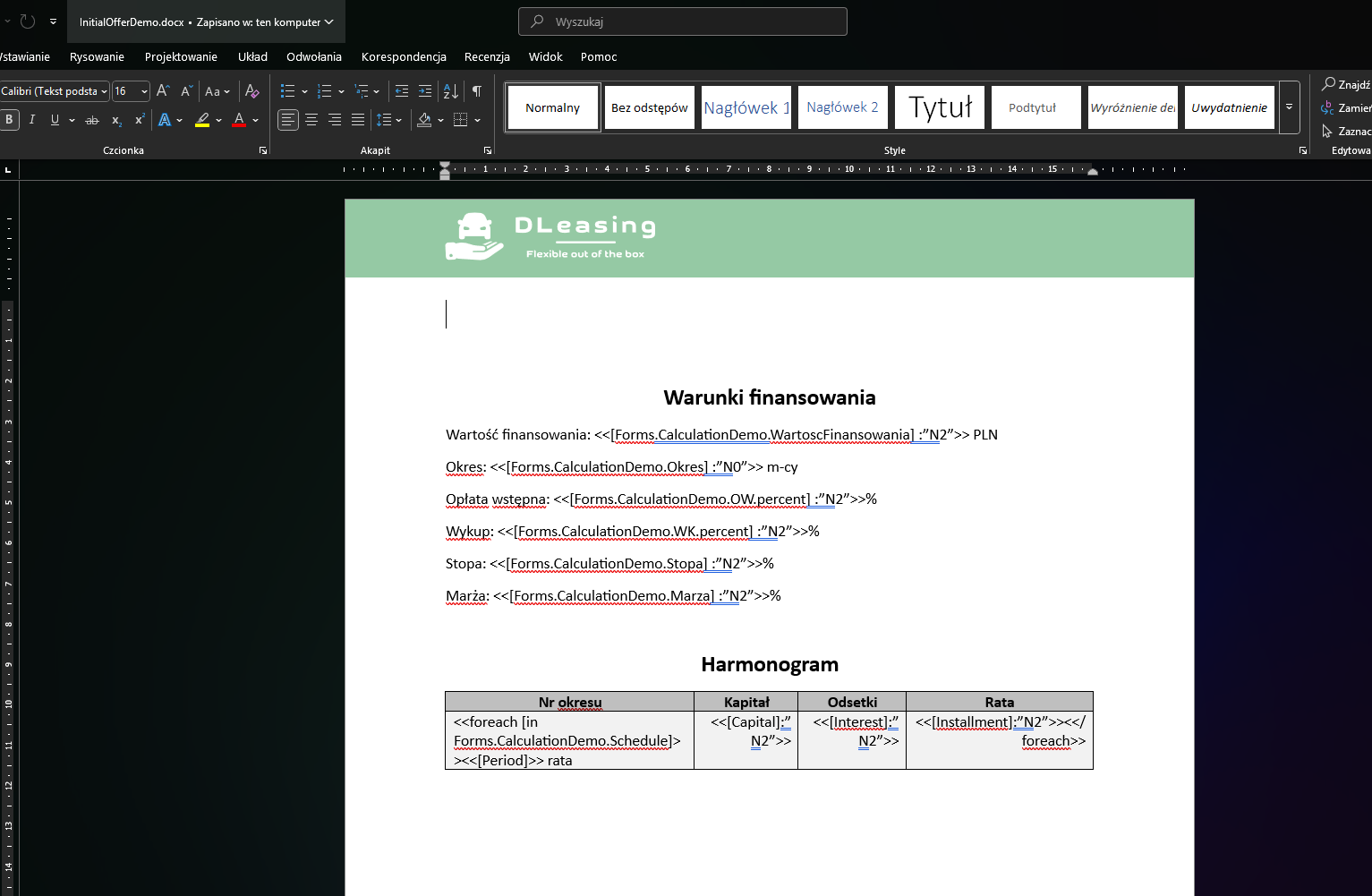
All system printouts – contracts, applications, decisions, confirmations – are generated from DOCX templates. Creating and editing documents can be done by marketing, legal, or business staff.
Flexible formatting (fonts, colors, tables, images)
Reference form values by path
Parameterized documents (different versions for different scenarios)
Automatic number and date generation
Business Modules Ecosystem
The DLowCode platform consists of specialized modules, each handling a specific functional area. This makes the system modular, scalable, and maintainable.
DLowCode-Module
Platform Engine
The system core orchestrating all modules. Manages process lifecycles, inter-module communication, and business rule execution.
DLowCode-UI
Presentation Layer
User interface built with React and Material-UI. Responsive design for PC, tablet, and smartphone. JsonForms screen builder with an extensive control library.
Camunda BPM
Business Process Engine
One of the world's most popular BPM engines. Visual process design in BPMN 2.0, execution monitoring, and task management.
DSchedules
Calculation & Scheduling Module
Handles financing installment calculations and recalculations, plus schedule updates. Based on business rules manageable by your organization.
DAuth
Authentication & User Management
User, role, and permission management. Two-factor authentication (2FA), organizational hierarchies, and session management.
DContractors
Contractor Database
DContractors is a centralized contractor database with public registry integration.
DDocs
Document Repository
During transaction processing, many documents require verification. All attachments go to the document repository, which provides upload, retrieval, and search services.
DPrintouts
Document Generation
All system documents – contracts, applications, decisions, confirmations – are generated from DOCX templates. Marketing, legal, or business staff can create and edit templates.
DMessages
Notifications & Communication
Notification generation and delivery (email, SMS, in-app). Business users can manage templates without developer involvement.
DRules
Business Rules Engine
Business rules – often the most frequently changing part of a system – are defined in Excel files. Business users can manage them without developers.
Document Workflow
Document Routing
Define workflows for document types and process them according to organizational requirements.
Benefits of Modular Approach
Modular architecture isn't just a technical solution – it's a business advantage that delivers flexibility, security, and rapid system development.
Scalability
Adding new features? Add a new module without rebuilding the entire system.
Easy Maintenance
Bug in DDocs module? Fix only that module, everything else keeps working.
Replaceability
Want to change SMS providers? Swap the adapter in DMessages, everything else stays the same.
Reusability
Modules (DAuth, DDocs, DRules) can be used across different projects.
How Do Modules Work Together?
Modules communicate through well-defined APIs (REST) and message queues (RabbitMQ). This makes them independent and easily replaceable.
Example Flow – Leasing Application Processing
Proven Technologies and Standards
Frontend
- React + Material-UI (MUI)
- JsonForms for forms
- TypeScript
- Responsive design
Backend
- C# / .NET
- RESTful API
- Camunda BPM
Databases
- SQL Server / PostgreSQL
- RabbitMQ (message queues)
- Hangfire (background jobs)
Integrations
- REST/SOAP APIs
- Business registry integrations
- E-signature (mSign, Autenti)
- Payment systems
- Credit bureaus
Ready to talk?
Get in touch to discuss your needs. We’ll arrange a free consultation and a DLowCode demo tailored to your industry.
Send an inquiry
We reply within 24 business hours. If it’s urgent, please call us directly.